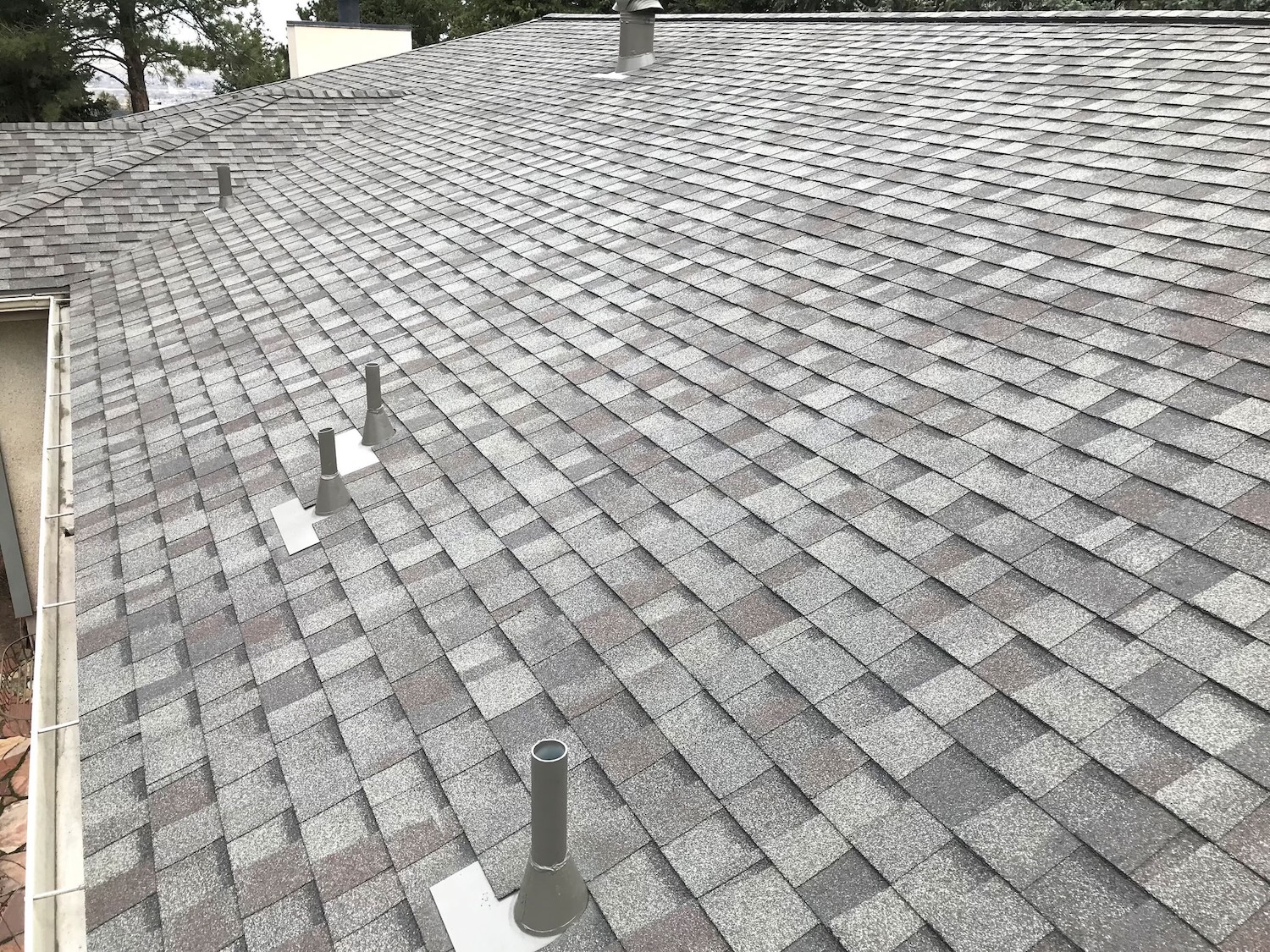


With the extreme seasonal temperatures in Utah, proper roof ventilation is critical for maintaining your home’s structural integrity, energy efficiency, and overall comfort.
Effective ventilation relies on a balanced system of intake vents (typically at the soffits) and exhaust vents (at the ridge or peak). This allows for continuous airflow, enabling your attic to “breathe.” Additionally, proper attic ventilation plays a key role in preventing the formation of ice dams and icicles during the winter months.
What Problems Does a Hot Attic Cause?
- Thermal Expansion & Contraction: Materials like shingles, flashing and plywood decking expand in the heat and contract as they cool at night. Over time, the “thermal shock” fatigues the roof, causing sealants to break, nails to back out, and flashing to work loose.
- UV Degradation: Utah’s elevation intensifies UV rays, which break down the chemical bonds in roofing materials. This causes asphalt shingles to lose their protective granules, become brittle, and eventually crack or curl.
- Attic Heat Buildup: Without proper ventilation, attics can become “heat domes”, reaching temperatures far higher than the outdoors. This excessive heat can warp decking and rafters from the inside out, skyrocketing cooling costs.
- Ice Damns: In the winter, an attic that is too warm will cause snow to melt on the main roof and refreeze over the eaves. This creates ice dams and icicles, which is a common problem in higher elevation cities like Sandy, Cottonwood Heights and Draper.
Signs of Heat Damage to Watch For
- Curling or Cupping: Shingle edges turning upward due to moisture loss and thermal stress.
- Granule Loss: Finding sand-like particles in gutters, which indicates the UV-protective layer is failing.
- Cracked Sealants: Dried-out or split caulking around vents, chimneys, and skylights.
- Interior Red Flags: Musty attic odors, high temperatures in the home that are often very noticeable.
Tips for Utah Homeowners
Most homes that are 20+ years old will not have a ventilation system that is good enough to meet new standards. Proper attic ventilation is frequently overlooked by many roofing contractors. It is common for estimates to include the installation of ridge or turtle vents without addressing necessary intake ventilation. To avoid this issue, make sure you:
- Hire the Right Roofing Company: A high-quality roofing contractor should address attic ventilation by running calculations and designing a proper ventilation system.
- Ensure Your New Roof Includes Ventilation: It should be up to code and include intake and exhaust ventilation.
Effective ventilation requires high-quality products tailored to your home’s specific design. For instance, ridge vent systems are highly effective but require sufficient ridge length and must be installed at the roof’s highest point. Conversely, high-quality metal turtle vents are an excellent exhaust solution for roofs with shorter ridge lines.
Intake ventilation is often more challenging to address. While newer homes typically have intake vents at the eaves or soffits, older homes may require retrofitting or installation of edge vents along the lower portion of the roof.
We ensure that your ventilation system is correctly design and installed to protect your home.