
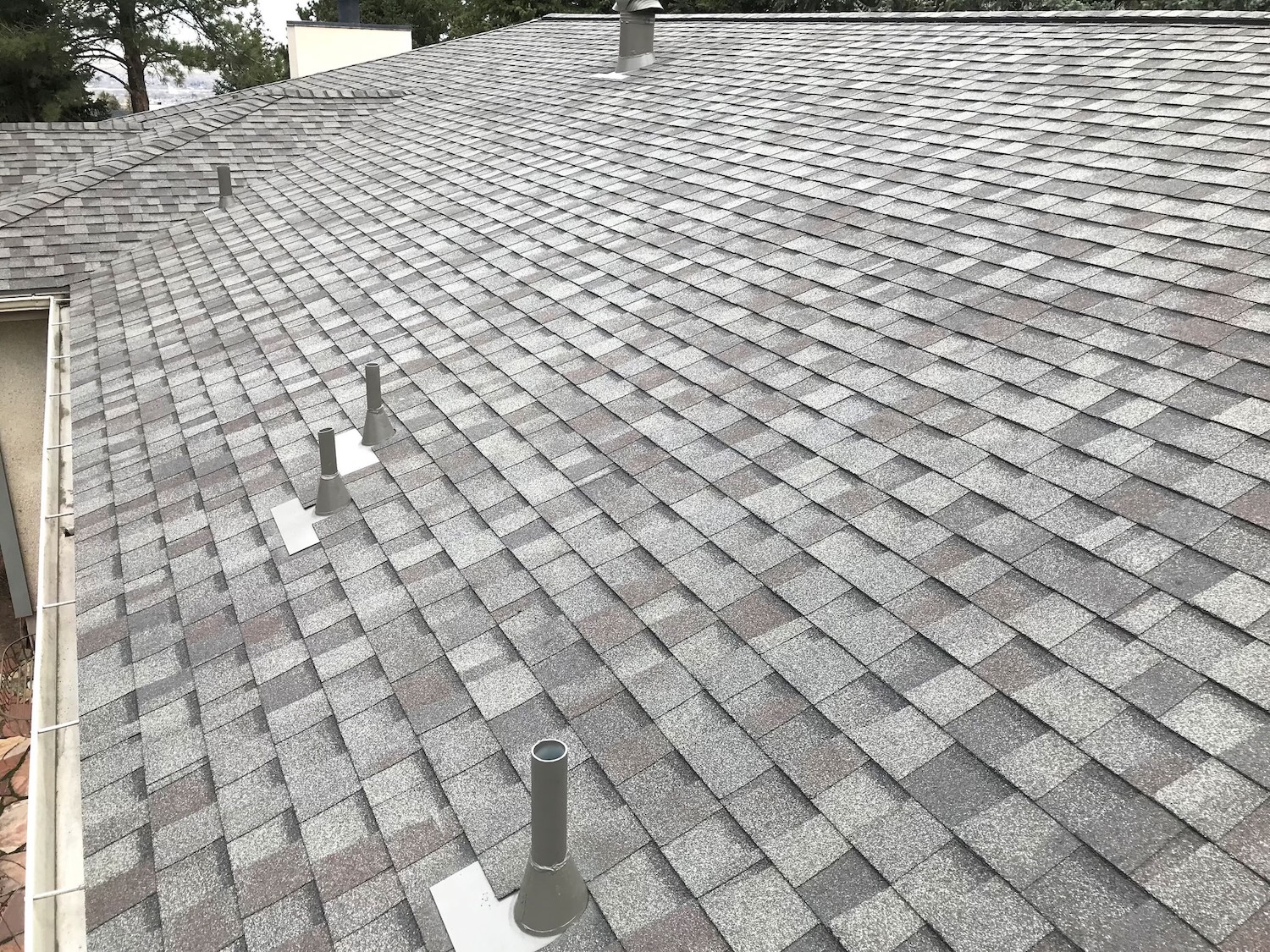
Utah and Salt Lake County are known for high wind areas, particularly South Jordan and West Jordan. Wind gusts exceeding 50 mph can easily lift or blow off shingles.
Wind damage is often subtle and can go unnoticed until leaks occur. It’s critical to have your roof inspected periodically or after a wind storm to see if repair or replacement of shingles is needed. If you are unable to safely inspect your roof from the ground, a professional evaluation by a qualified roofing contractor is recommended.
Key Signs of Wind Damage
- Missing Shingles: The most obvious sign is finding shingles in your yard or seeing bare patches on the roof where the underlayment is exposed.
- Crease Lines: High winds can lift a shingle and fold it back, creating a permanent horizontal crease line on the shingle.
- Lifted or Broken Seals: Wind can break the adhesive bond between shingles. Even if they lay flat afterward, the seal is compromised, making them vulnerable to the next storm.
- Curling or Tearing: Shingles may curl at the edges or show visible tears, especially if they are older and brittle.
Immediate Steps to Take
- Safety First: Do not climb onto a roof yourself after a storm. Look from the ground for initial inspection.
- Document the Damage: Take clear photos and videos of the roof from the ground and any interior water stains on ceiling or in the attic to support future insurance claims.
- Check the Attic: Use a flashlight to look for water stains, damp insulation, or “pinpricks of light” visible through the underside of the roof.
- Professional Inspection: Schedule a professional roof inspection. Reputable contractors off free assessments to determine if a repair or full replacement is necessary.
- Temporary Mitigation: If there are active leaks, a roofing company can install emergency tarps to prevent further interior damage while you wait for a repair.
Insurance and Repair Considerations
- Insurance Coverage: Standard homeowners insurance usually covers wind related roofing damage.
- The 25% Rule: Utah insurance adjusters follow the “25% Rule”, stating that if more than 25% of the roof is damaged, the entire roof should be replaced by the insurance company, rather than patched.
- Wind Resistance: When replacing shingles, consider materials with high wind ratings. For example, we install our shingles to 160 MPH wind warranty. This is the highest wind rating in the industry.
We understand that a wind storm can be a very stressful experience for a homeowner, especially when you are concerned about potential roof damage and water entering your home.
During this time, you may encounter “storm chasing companies” that knock on your door and promise to help. Please be aware that reputable contractors generally do not solicit door-to-door. We recommend contacting a a roofing company that you have researched and selected for yourself, rather than signing contracts with unsolicited callers who promise insurance coverage.

